RENK Porter's Five Forces Analysis

Don't Miss the Bigger Picture
RENK operates in a landscape shaped by intense competition, the bargaining power of its buyers and suppliers, and the constant threat of new entrants and substitutes. Understanding these forces is crucial for navigating its market effectively.
This brief snapshot only scratches the surface. Unlock the full Porter's Five Forces Analysis to explore RENK’s competitive dynamics, market pressures, and strategic advantages in detail.
Suppliers Bargaining Power

Specialized Component Dependency
RENK Group's reliance on highly specialized, precision-engineered components for its advanced drive technology, such as specific alloys or electronic controls, can give significant power to a limited number of niche suppliers. For instance, in 2024, the defense sector's increasing demand for advanced materials with unique thermal and structural properties for military applications meant that suppliers of these niche materials held considerable sway.
These suppliers often possess unique intellectual property or manufacturing capabilities that are difficult to replicate, making RENK dependent on their offerings. The high performance and reliability demands of RENK's products, particularly in defense and marine applications, necessitate components that meet stringent quality standards, further limiting the pool of qualified suppliers. In 2024, RENK's successful bid for a major naval contract underscored the critical need for specialized transmission components, where the primary supplier had exclusive rights to a patented cooling technology.
High Switching Costs for Critical Inputs
Changing suppliers for mission-critical components like specialized gear materials or bearing designs presents significant financial and operational hurdles for RENK. These involve costly re-qualification procedures, potential product redesigns, and extensive testing to maintain performance and meet stringent industry regulations.
In 2024, the aerospace and defense sectors, key markets for RENK, continued to emphasize long-term supplier relationships due to the critical nature of their supply chains. The average lead time for highly specialized industrial components, like those RENK utilizes, can extend to over 12 months, further increasing the cost and risk associated with supplier changes.
These substantial switching costs inherently limit RENK's ability to easily change suppliers, thereby bolstering the negotiating leverage of its current, well-established providers for these essential inputs.

Supplier Concentration in Niche Markets
In highly specialized niches within the drive technology sector, supplier concentration can be a significant factor. For instance, in certain advanced gear manufacturing or specialized material supply chains crucial for RENK's high-performance products, the market might feature only a handful of dominant players. This limited competition grants these suppliers considerable leverage in dictating pricing, delivery schedules, and even the technical specifications of the components they provide.
When RENK encounters such a concentrated supplier landscape for critical, high-value inputs, its bargaining power is naturally diminished. The inability to easily switch to alternative providers means RENK must often accept the terms offered, potentially impacting cost structures and production timelines. For example, if a single supplier holds a patent for a unique alloy essential for RENK's gearboxes, that supplier can command premium prices.

Forward Integration Threat from Suppliers
Suppliers possessing advanced technological capabilities or providing essential components for RENK's specialized systems could potentially engage in forward integration. While direct takeover of RENK's complex system integration and customization operations is improbable, a supplier could develop a more comprehensive, integrated sub-system. This might diminish the perceived value of RENK's own integration services, subtly enhancing supplier leverage.
RENK's strategy likely involves fostering robust supplier relationships and exploring strategic alliances to mitigate this risk. For instance, in 2024, the global defense industry saw increased collaboration between prime contractors and key component suppliers to ensure supply chain resilience for advanced military platforms. This trend underscores the importance of proactive supplier management for companies like RENK.
- Forward Integration Risk: Suppliers with critical technological expertise might develop integrated sub-systems that reduce the need for RENK's customization services.
- Supplier Power Impact: Such integration by suppliers can subtly increase their bargaining power by diminishing the unique value proposition of RENK's core offerings.
- Strategic Mitigation: Maintaining strong supplier relationships and pursuing strategic partnerships are key to managing this potential threat.
- Industry Trend: The defense sector in 2024 highlighted increased supplier-prime contractor collaborations, emphasizing the strategic importance of supplier engagement.
Impact of Raw Material Price Volatility
Fluctuations in the prices of specialized metals and rare earth elements, crucial for RENK's high-performance components, directly influence its cost structure. For instance, the price of neodymium, a key rare earth element, saw significant volatility in 2023, with prices per kilogram ranging from $100 to over $200 depending on market conditions and purity. While RENK manufactures finished products, its suppliers' costs are intrinsically linked to these upstream raw material price swings. This can empower suppliers, particularly if RENK faces challenges in absorbing or passing on these increased costs to its own clientele.
The bargaining power of suppliers is amplified when they control essential inputs that are difficult for RENK to substitute. For example, if a particular alloy used in RENK's transmissions is sourced from a limited number of specialized suppliers, those suppliers gain leverage. In 2024, reports indicated that lead times for certain high-grade steel alloys, critical for heavy-duty gear manufacturing, extended by up to 20%, suggesting supply chain constraints that bolster supplier negotiation strength.
- Upstream Cost Pass-Through: Suppliers of critical raw materials can pass on price increases, directly impacting RENK's manufacturing expenses.
- Limited Substitution: If specialized materials have few viable alternatives, suppliers of these materials hold greater power.
- Supply Chain Disruptions: Events like geopolitical tensions or natural disasters can disrupt raw material availability, increasing supplier leverage.
- Supplier Concentration: A market with few suppliers for essential components inherently gives those suppliers more bargaining power.
Specialized Component Suppliers: Unpacking Their Potent Bargaining Power
Suppliers of specialized, high-performance components for RENK's advanced drive systems wield significant bargaining power due to limited alternatives and high switching costs. In 2024, the defense sector’s demand for unique materials, like those with specific thermal properties, meant suppliers of these niche inputs held considerable sway. This power is further cemented by suppliers' unique intellectual property and the stringent quality standards RENK must meet, restricting the pool of viable providers.
The concentration of suppliers in critical niches, such as advanced gear manufacturing, grants dominant players leverage in pricing and delivery. For instance, a supplier holding a patent for an essential alloy for RENK's gearboxes can command premium prices, diminishing RENK's negotiation strength. This is compounded by extended lead times, which for specialized industrial components, can exceed 12 months, increasing the cost and risk associated with supplier changes.
Upstream raw material price fluctuations, such as for rare earth elements like neodymium, directly impact RENK's suppliers and, consequently, RENK's cost structure. For example, neodymium prices varied significantly in 2023. Furthermore, supply chain constraints, like the reported 20% increase in lead times for high-grade steel alloys in 2024, bolster supplier negotiation power by limiting RENK's ability to substitute or absorb cost increases.
| Factor | Impact on RENK | 2024 Data Point/Example |
| Supplier Specialization & IP | High dependence, limits alternatives | Suppliers of patented cooling technology for naval contracts |
| Switching Costs | High financial and operational hurdles | Costly re-qualification, redesign, and testing |
| Supplier Concentration | Dominant players dictate terms | Few suppliers for advanced gear materials |
| Raw Material Volatility | Impacts supplier costs, potentially passed on | Neodymium price fluctuations (2023: $100-$200/kg) |
| Supply Chain Constraints | Increased lead times bolster supplier negotiation | 20%+ lead time increase for high-grade steel alloys (2024) |
What is included in the product
 Detailed Word Document
This analysis dissects the competitive landscape for RENK by examining the intensity of rivalry, the bargaining power of buyers and suppliers, the threat of new entrants, and the availability of substitutes.

 Customizable Excel Spreadsheet
Instantly visualize competitive intensity and potential threats with a dynamic, interactive model that pinpoints areas needing strategic attention.
Customers Bargaining Power

Concentrated Customer Base in Defense
RENK's significant presence in the defense sector means its customer base is often concentrated among large government agencies and major defense contractors. For instance, the U.S. Army's demand for RENK's HMPT transmissions highlights the substantial order volumes these key clients represent.
This concentration grants these customers considerable bargaining power. They can leverage their large procurement volumes to negotiate favorable pricing, stringent product specifications, and advantageous contract terms, directly impacting RENK's profit margins and strategic product direction.
High Switching Costs for Customers
RENK's highly specialized propulsion and suspension systems for demanding sectors like military vehicles and naval applications mean customers face substantial hurdles if they decide to switch. These aren't off-the-shelf components; they are deeply integrated into complex machinery.
The cost and effort required for re-engineering, extensive testing, and obtaining new certifications to replace RENK's gear units or suspension systems are significant deterrents. This integration lock-in effectively raises switching costs, giving RENK a stronger hand in its customer relationships.

Mission-Critical Product Importance
RENK's products are absolutely vital for defense, marine, and heavy industrial sectors, demanding extreme precision and unwavering reliability. This mission-critical nature means customers are less focused on price and more on ensuring their operations run flawlessly, significantly dampening their ability to negotiate on cost alone.
For instance, in the defense sector, the failure of a RENK transmission component could have catastrophic consequences, making guaranteed performance a far higher priority than a slight price reduction. This inherent need for operational excellence means customers often accept premium pricing to avoid costly downtime and ensure mission success.

Long-Term Contracts and Aftermarket Services
Renk AG benefits significantly from its long-term contracts, especially within the defense industry. These agreements often span many years, creating a predictable revenue stream and reducing the immediate bargaining power of customers. For instance, in 2023, Renk's order backlog stood at €4.3 billion, a substantial portion of which is tied to these long-term commitments.
The integration of comprehensive aftermarket services, including maintenance, repair, and spare parts, further solidifies these customer relationships. This ongoing engagement means customers are less likely to switch suppliers for recurring business, as the costs and complexities of transitioning are high. Renk's commitment to supporting its products throughout their lifecycle is a key factor in maintaining customer loyalty and mitigating their bargaining power.
- Long-Term Contracts: RENK's defense sector contracts often extend for many years, providing revenue stability.
- Aftermarket Services: Maintenance, repair, and spare parts offerings lock in customers and reduce switching incentives.
- Customer Loyalty: These integrated services foster strong customer relationships, diminishing immediate bargaining power.
- Revenue Predictability: The structure of these contracts enhances the predictability of RENK's future earnings.
Customer Demand for Customization and Innovation
Customers in RENK's key sectors, such as marine and industrial applications, increasingly seek highly customized solutions and cutting-edge innovation in power transmission and motion control. This translates to a demand for tailored products that precisely meet specific operational needs, rather than off-the-shelf alternatives.
This drive for bespoke solutions can amplify customer bargaining power, as clients often dictate particular features and performance benchmarks. For instance, in the naval sector, specific engine requirements for new vessel classes necessitate deep collaboration and customization, giving shipbuilders significant leverage.
- Customer Demand for Customization: RENK's focus on specialized gear units and propulsion systems means clients often require unique configurations.
- Innovation as a Driver: The need for advanced, fuel-efficient, and high-performance systems pushes customers to demand continuous R&D from suppliers like RENK.
- Impact on Bargaining Power: When customers can specify exact technical parameters, their ability to negotiate terms and pricing increases.
- RENK's Differentiation: While customization strengthens customer power, it also provides RENK opportunities to build loyalty and command premium pricing for its specialized engineering expertise.
Customer Leverage: High Switching Costs and Mission-Critical Solutions
RENK's customer base, particularly in defense and heavy industry, often comprises large, sophisticated entities with significant purchasing power. These clients, such as major defense contractors and shipbuilding companies, can leverage their substantial order volumes to negotiate favorable terms, impacting RENK's pricing and margins.
The highly specialized nature of RENK's propulsion and suspension systems creates high switching costs for customers. Re-engineering and recertification processes for alternative components are complex and expensive, effectively locking customers into RENK's offerings and reducing their immediate bargaining leverage.
RENK's mission-critical products, essential for reliable operation in demanding environments, mean customers prioritize performance and dependability over price. This focus on operational integrity limits customers' ability to negotiate solely on cost, as the consequences of component failure are severe.
| Customer Type | Bargaining Power Factors | Impact on RENK |
|---|---|---|
| Government Agencies/Defense Contractors | High volume procurement, standardization requirements | Price negotiation, specification influence |
| Naval & Marine Sector | Customization needs, long-term vessel lifecycles | Tailored solutions, potential for premium pricing |
| Industrial Machinery Manufacturers | Integration complexity, demand for reliability | Reduced price sensitivity, focus on performance |
Preview Before You Purchase
RENK Porter's Five Forces Analysis
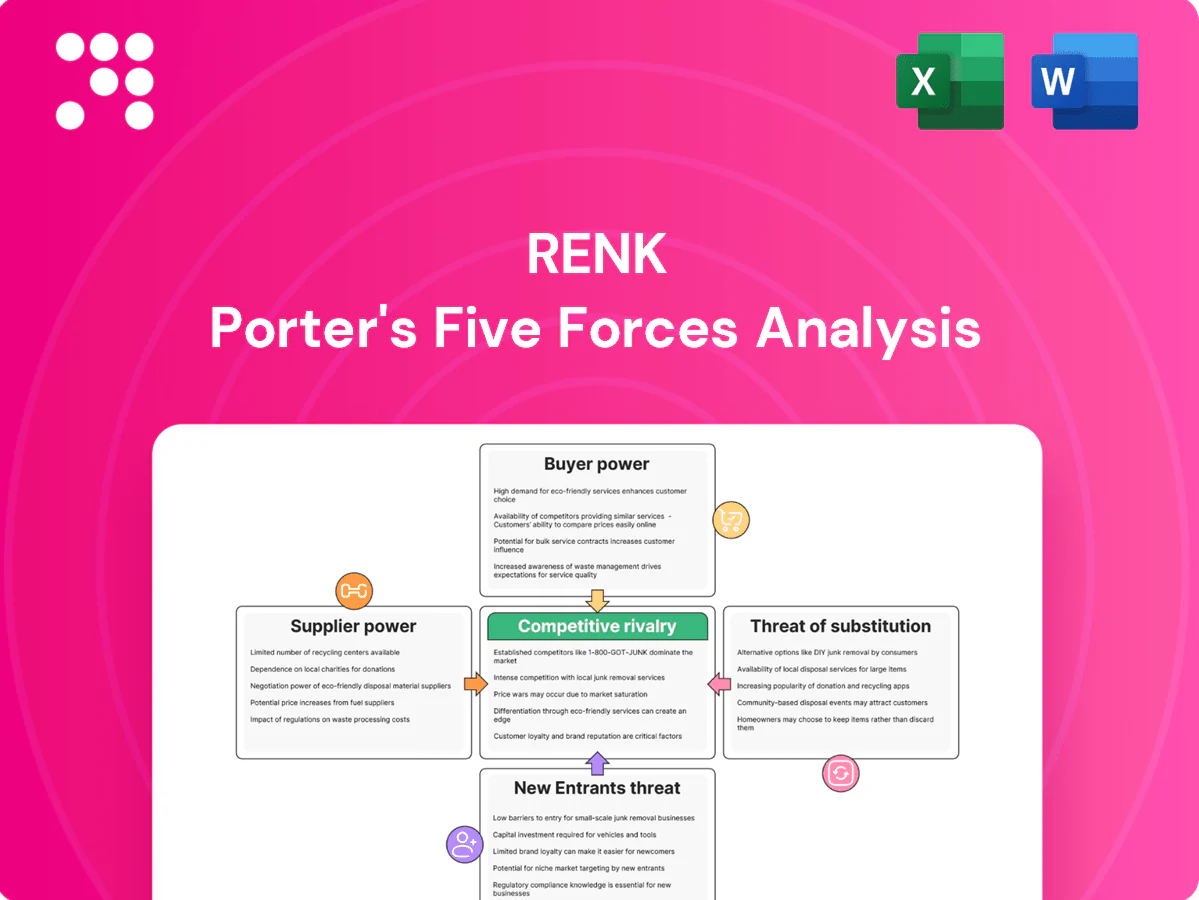
This preview showcases the complete RENK Porter's Five Forces Analysis, offering a detailed examination of competitive forces within the industry. The document you see here is the exact, professionally formatted report you will receive immediately after purchase, ensuring full transparency and immediate utility.

Description
Don't Miss the Bigger Picture
RENK operates in a landscape shaped by intense competition, the bargaining power of its buyers and suppliers, and the constant threat of new entrants and substitutes. Understanding these forces is crucial for navigating its market effectively.
This brief snapshot only scratches the surface. Unlock the full Porter's Five Forces Analysis to explore RENK’s competitive dynamics, market pressures, and strategic advantages in detail.
Suppliers Bargaining Power
Specialized Component Dependency
RENK Group's reliance on highly specialized, precision-engineered components for its advanced drive technology, such as specific alloys or electronic controls, can give significant power to a limited number of niche suppliers. For instance, in 2024, the defense sector's increasing demand for advanced materials with unique thermal and structural properties for military applications meant that suppliers of these niche materials held considerable sway.
These suppliers often possess unique intellectual property or manufacturing capabilities that are difficult to replicate, making RENK dependent on their offerings. The high performance and reliability demands of RENK's products, particularly in defense and marine applications, necessitate components that meet stringent quality standards, further limiting the pool of qualified suppliers. In 2024, RENK's successful bid for a major naval contract underscored the critical need for specialized transmission components, where the primary supplier had exclusive rights to a patented cooling technology.
High Switching Costs for Critical Inputs
Changing suppliers for mission-critical components like specialized gear materials or bearing designs presents significant financial and operational hurdles for RENK. These involve costly re-qualification procedures, potential product redesigns, and extensive testing to maintain performance and meet stringent industry regulations.
In 2024, the aerospace and defense sectors, key markets for RENK, continued to emphasize long-term supplier relationships due to the critical nature of their supply chains. The average lead time for highly specialized industrial components, like those RENK utilizes, can extend to over 12 months, further increasing the cost and risk associated with supplier changes.
These substantial switching costs inherently limit RENK's ability to easily change suppliers, thereby bolstering the negotiating leverage of its current, well-established providers for these essential inputs.
Supplier Concentration in Niche Markets
In highly specialized niches within the drive technology sector, supplier concentration can be a significant factor. For instance, in certain advanced gear manufacturing or specialized material supply chains crucial for RENK's high-performance products, the market might feature only a handful of dominant players. This limited competition grants these suppliers considerable leverage in dictating pricing, delivery schedules, and even the technical specifications of the components they provide.
When RENK encounters such a concentrated supplier landscape for critical, high-value inputs, its bargaining power is naturally diminished. The inability to easily switch to alternative providers means RENK must often accept the terms offered, potentially impacting cost structures and production timelines. For example, if a single supplier holds a patent for a unique alloy essential for RENK's gearboxes, that supplier can command premium prices.
Forward Integration Threat from Suppliers
Suppliers possessing advanced technological capabilities or providing essential components for RENK's specialized systems could potentially engage in forward integration. While direct takeover of RENK's complex system integration and customization operations is improbable, a supplier could develop a more comprehensive, integrated sub-system. This might diminish the perceived value of RENK's own integration services, subtly enhancing supplier leverage.
RENK's strategy likely involves fostering robust supplier relationships and exploring strategic alliances to mitigate this risk. For instance, in 2024, the global defense industry saw increased collaboration between prime contractors and key component suppliers to ensure supply chain resilience for advanced military platforms. This trend underscores the importance of proactive supplier management for companies like RENK.
- Forward Integration Risk: Suppliers with critical technological expertise might develop integrated sub-systems that reduce the need for RENK's customization services.
- Supplier Power Impact: Such integration by suppliers can subtly increase their bargaining power by diminishing the unique value proposition of RENK's core offerings.
- Strategic Mitigation: Maintaining strong supplier relationships and pursuing strategic partnerships are key to managing this potential threat.
- Industry Trend: The defense sector in 2024 highlighted increased supplier-prime contractor collaborations, emphasizing the strategic importance of supplier engagement.
Impact of Raw Material Price Volatility
Fluctuations in the prices of specialized metals and rare earth elements, crucial for RENK's high-performance components, directly influence its cost structure. For instance, the price of neodymium, a key rare earth element, saw significant volatility in 2023, with prices per kilogram ranging from $100 to over $200 depending on market conditions and purity. While RENK manufactures finished products, its suppliers' costs are intrinsically linked to these upstream raw material price swings. This can empower suppliers, particularly if RENK faces challenges in absorbing or passing on these increased costs to its own clientele.
The bargaining power of suppliers is amplified when they control essential inputs that are difficult for RENK to substitute. For example, if a particular alloy used in RENK's transmissions is sourced from a limited number of specialized suppliers, those suppliers gain leverage. In 2024, reports indicated that lead times for certain high-grade steel alloys, critical for heavy-duty gear manufacturing, extended by up to 20%, suggesting supply chain constraints that bolster supplier negotiation strength.
- Upstream Cost Pass-Through: Suppliers of critical raw materials can pass on price increases, directly impacting RENK's manufacturing expenses.
- Limited Substitution: If specialized materials have few viable alternatives, suppliers of these materials hold greater power.
- Supply Chain Disruptions: Events like geopolitical tensions or natural disasters can disrupt raw material availability, increasing supplier leverage.
- Supplier Concentration: A market with few suppliers for essential components inherently gives those suppliers more bargaining power.
Specialized Component Suppliers: Unpacking Their Potent Bargaining Power
Suppliers of specialized, high-performance components for RENK's advanced drive systems wield significant bargaining power due to limited alternatives and high switching costs. In 2024, the defense sector’s demand for unique materials, like those with specific thermal properties, meant suppliers of these niche inputs held considerable sway. This power is further cemented by suppliers' unique intellectual property and the stringent quality standards RENK must meet, restricting the pool of viable providers.
The concentration of suppliers in critical niches, such as advanced gear manufacturing, grants dominant players leverage in pricing and delivery. For instance, a supplier holding a patent for an essential alloy for RENK's gearboxes can command premium prices, diminishing RENK's negotiation strength. This is compounded by extended lead times, which for specialized industrial components, can exceed 12 months, increasing the cost and risk associated with supplier changes.
Upstream raw material price fluctuations, such as for rare earth elements like neodymium, directly impact RENK's suppliers and, consequently, RENK's cost structure. For example, neodymium prices varied significantly in 2023. Furthermore, supply chain constraints, like the reported 20% increase in lead times for high-grade steel alloys in 2024, bolster supplier negotiation power by limiting RENK's ability to substitute or absorb cost increases.
| Factor | Impact on RENK | 2024 Data Point/Example |
| Supplier Specialization & IP | High dependence, limits alternatives | Suppliers of patented cooling technology for naval contracts |
| Switching Costs | High financial and operational hurdles | Costly re-qualification, redesign, and testing |
| Supplier Concentration | Dominant players dictate terms | Few suppliers for advanced gear materials |
| Raw Material Volatility | Impacts supplier costs, potentially passed on | Neodymium price fluctuations (2023: $100-$200/kg) |
| Supply Chain Constraints | Increased lead times bolster supplier negotiation | 20%+ lead time increase for high-grade steel alloys (2024) |
What is included in the product
Detailed Word Document
This analysis dissects the competitive landscape for RENK by examining the intensity of rivalry, the bargaining power of buyers and suppliers, the threat of new entrants, and the availability of substitutes.
Customizable Excel Spreadsheet
Instantly visualize competitive intensity and potential threats with a dynamic, interactive model that pinpoints areas needing strategic attention.
Customers Bargaining Power
Concentrated Customer Base in Defense
RENK's significant presence in the defense sector means its customer base is often concentrated among large government agencies and major defense contractors. For instance, the U.S. Army's demand for RENK's HMPT transmissions highlights the substantial order volumes these key clients represent.
This concentration grants these customers considerable bargaining power. They can leverage their large procurement volumes to negotiate favorable pricing, stringent product specifications, and advantageous contract terms, directly impacting RENK's profit margins and strategic product direction.
High Switching Costs for Customers
RENK's highly specialized propulsion and suspension systems for demanding sectors like military vehicles and naval applications mean customers face substantial hurdles if they decide to switch. These aren't off-the-shelf components; they are deeply integrated into complex machinery.
The cost and effort required for re-engineering, extensive testing, and obtaining new certifications to replace RENK's gear units or suspension systems are significant deterrents. This integration lock-in effectively raises switching costs, giving RENK a stronger hand in its customer relationships.
Mission-Critical Product Importance
RENK's products are absolutely vital for defense, marine, and heavy industrial sectors, demanding extreme precision and unwavering reliability. This mission-critical nature means customers are less focused on price and more on ensuring their operations run flawlessly, significantly dampening their ability to negotiate on cost alone.
For instance, in the defense sector, the failure of a RENK transmission component could have catastrophic consequences, making guaranteed performance a far higher priority than a slight price reduction. This inherent need for operational excellence means customers often accept premium pricing to avoid costly downtime and ensure mission success.
Long-Term Contracts and Aftermarket Services
Renk AG benefits significantly from its long-term contracts, especially within the defense industry. These agreements often span many years, creating a predictable revenue stream and reducing the immediate bargaining power of customers. For instance, in 2023, Renk's order backlog stood at €4.3 billion, a substantial portion of which is tied to these long-term commitments.
The integration of comprehensive aftermarket services, including maintenance, repair, and spare parts, further solidifies these customer relationships. This ongoing engagement means customers are less likely to switch suppliers for recurring business, as the costs and complexities of transitioning are high. Renk's commitment to supporting its products throughout their lifecycle is a key factor in maintaining customer loyalty and mitigating their bargaining power.
- Long-Term Contracts: RENK's defense sector contracts often extend for many years, providing revenue stability.
- Aftermarket Services: Maintenance, repair, and spare parts offerings lock in customers and reduce switching incentives.
- Customer Loyalty: These integrated services foster strong customer relationships, diminishing immediate bargaining power.
- Revenue Predictability: The structure of these contracts enhances the predictability of RENK's future earnings.
Customer Demand for Customization and Innovation
Customers in RENK's key sectors, such as marine and industrial applications, increasingly seek highly customized solutions and cutting-edge innovation in power transmission and motion control. This translates to a demand for tailored products that precisely meet specific operational needs, rather than off-the-shelf alternatives.
This drive for bespoke solutions can amplify customer bargaining power, as clients often dictate particular features and performance benchmarks. For instance, in the naval sector, specific engine requirements for new vessel classes necessitate deep collaboration and customization, giving shipbuilders significant leverage.
- Customer Demand for Customization: RENK's focus on specialized gear units and propulsion systems means clients often require unique configurations.
- Innovation as a Driver: The need for advanced, fuel-efficient, and high-performance systems pushes customers to demand continuous R&D from suppliers like RENK.
- Impact on Bargaining Power: When customers can specify exact technical parameters, their ability to negotiate terms and pricing increases.
- RENK's Differentiation: While customization strengthens customer power, it also provides RENK opportunities to build loyalty and command premium pricing for its specialized engineering expertise.
Customer Leverage: High Switching Costs and Mission-Critical Solutions
RENK's customer base, particularly in defense and heavy industry, often comprises large, sophisticated entities with significant purchasing power. These clients, such as major defense contractors and shipbuilding companies, can leverage their substantial order volumes to negotiate favorable terms, impacting RENK's pricing and margins.
The highly specialized nature of RENK's propulsion and suspension systems creates high switching costs for customers. Re-engineering and recertification processes for alternative components are complex and expensive, effectively locking customers into RENK's offerings and reducing their immediate bargaining leverage.
RENK's mission-critical products, essential for reliable operation in demanding environments, mean customers prioritize performance and dependability over price. This focus on operational integrity limits customers' ability to negotiate solely on cost, as the consequences of component failure are severe.
| Customer Type | Bargaining Power Factors | Impact on RENK |
|---|---|---|
| Government Agencies/Defense Contractors | High volume procurement, standardization requirements | Price negotiation, specification influence |
| Naval & Marine Sector | Customization needs, long-term vessel lifecycles | Tailored solutions, potential for premium pricing |
| Industrial Machinery Manufacturers | Integration complexity, demand for reliability | Reduced price sensitivity, focus on performance |
Preview Before You Purchase
RENK Porter's Five Forces Analysis
This preview showcases the complete RENK Porter's Five Forces Analysis, offering a detailed examination of competitive forces within the industry. The document you see here is the exact, professionally formatted report you will receive immediately after purchase, ensuring full transparency and immediate utility.