Scandic Porter's Five Forces Analysis

Elevate Your Analysis with the Complete Porter's Five Forces Analysis
Scandic's competitive landscape is shaped by the interplay of buyer power, supplier leverage, the threat of new entrants, and the availability of substitutes. Understanding these forces is crucial for navigating the hotel industry.
The complete report reveals the real forces shaping Scandic’s industry—from supplier influence to threat of new entrants. Gain actionable insights to drive smarter decision-making.
Suppliers Bargaining Power

Fragmented Supplier Base
Scandic benefits from a generally fragmented supplier base for many of its operational needs, such as food and beverages, cleaning supplies, and general hotel amenities. This wide distribution of suppliers means no single one can typically dictate terms or prices, which is advantageous for Scandic. For example, in 2023, the European food and beverage market, a key input for Scandic, saw numerous smaller, regional suppliers competing with larger entities, keeping input costs relatively stable for hotel chains.
However, this fragmentation isn't uniform across all supplier categories. For specialized areas, like advanced hotel technology systems or unique sustainability consulting services, the supplier pool can be much smaller. In such cases, these specialized suppliers may hold more bargaining power due to their unique expertise or proprietary technology, potentially impacting Scandic's costs for these specific services.
Importance of Volume to Suppliers
Scandic's considerable scale, operating around 280 hotels with 58,000 rooms as of early 2024, translates into significant purchasing volume. This sheer size grants Scandic considerable leverage when negotiating with its suppliers, allowing it to secure more favorable pricing and terms. For instance, a hotel chain of Scandic's magnitude can command discounts on bulk orders of linens, food supplies, and amenities that smaller competitors cannot access.
This substantial volume directly diminishes the bargaining power of suppliers. Suppliers are incentivized to offer competitive pricing and favorable conditions to secure Scandic's consistent and large-scale business, as losing such a client would represent a significant revenue loss. This dynamic shifts the power balance firmly in Scandic's favor.
Furthermore, Scandic's strategy of establishing long-term contracts with key suppliers further solidifies its advantageous position. These agreements provide suppliers with predictable demand, while simultaneously locking in favorable pricing and service levels for Scandic, thereby mitigating the risk of sudden price hikes or supply disruptions.

Sustainability and Ethical Sourcing Requirements
Scandic's robust commitment to sustainability, exemplified by its adherence to the Nordic Swan Ecolabel and its comprehensive Supply Chain Code of Conduct, significantly shapes its supplier relationships. This dedication to ethical and sustainable sourcing practices means that not all suppliers can meet Scandic's rigorous standards.
Consequently, this selective procurement process can narrow the field of eligible suppliers, inadvertently bolstering the bargaining power of those businesses that demonstrably meet Scandic's stringent environmental and social criteria. For instance, in 2023, Scandic reported that 94% of its procurement value was covered by its sustainability requirements, highlighting the extensive influence of these standards on its supplier base.

Switching Costs for Major Supplies
While Scandic might easily switch providers for everyday items like linens or cleaning supplies, the cost and effort involved in changing suppliers for critical, large-scale services are considerably higher. For instance, replacing a property management system or sourcing new major renovation materials can involve substantial financial outlay, extensive training, and potential operational downtime, thereby increasing dependence on existing key suppliers.
- High Switching Costs for Core Services: Scandic faces significant financial and operational hurdles when changing providers for essential services like integrated property management software or long-term contracts for large-scale construction materials.
- Operational Disruption Risk: A transition to a new major supplier can lead to temporary disruptions in hotel operations, impacting guest services and internal workflows, which is a key consideration in supplier relationships.
- Supplier Dependence: The substantial investment required to switch major suppliers creates a degree of reliance on established partners, granting them a stronger bargaining position.
- Impact on Profitability: Increased costs associated with supplier switching can directly affect Scandic's profitability, making the negotiation of favorable terms with existing suppliers a strategic imperative.
Landlord Power in Lease Agreements
Scandic's reliance on leased properties means landlords hold considerable sway. In 2024, prime real estate markets saw continued strength, potentially increasing landlord leverage. This can translate into higher rental costs and stricter lease terms, impacting Scandic's operational expenses and flexibility.
- Landlord Leverage: In 2024, the hotel real estate market, particularly in sought-after urban centers, continued to favor property owners. This trend grants landlords significant bargaining power in lease negotiations.
- Cost Implications: Increased landlord power can lead to higher base rents and potentially escalations tied to inflation or market performance, directly affecting Scandic's cost structure. For example, reports from early 2024 indicated a 5-7% average increase in commercial lease rates in major European cities.
- Operational Constraints: Landlords may also dictate renovation requirements or impose limitations on property usage, which can affect Scandic's ability to adapt its hotel offerings to changing market demands.
Supplier Power Dynamics: Scale vs. Specialization
Scandic's bargaining power with suppliers is generally strong due to its large scale and fragmented supplier base for common goods, allowing for favorable pricing. However, this power is somewhat tempered by the high switching costs associated with specialized services and the leverage held by landlords in its leased property portfolio.
The company's significant purchasing volume, encompassing around 280 hotels with 58,000 rooms as of early 2024, enables it to negotiate better terms. For instance, its commitment to sustainability means 94% of its procurement value in 2023 adhered to stringent standards, influencing supplier selection and potentially empowering those that meet these criteria.
Conversely, landlords in prime locations, especially in 2024, wield considerable power, leading to potentially higher rents and stricter lease terms, as seen in early 2024 reports of 5-7% average increases in commercial lease rates in major European cities.
Switching core service providers, such as for integrated property management software, involves substantial financial and operational risks, creating a degree of dependence and thus increasing the bargaining power of these specialized suppliers.
What is included in the product
 Detailed Word Document
Scandic's Porter's Five Forces Analysis examines the competitive intensity within the hotel industry, assessing the threat of new entrants, the bargaining power of buyers and suppliers, the threat of substitutes, and the rivalry among existing competitors.

 Customizable Excel Spreadsheet
Scandic Porter's Five Forces Analysis provides a clear, actionable framework to identify and mitigate competitive threats, transforming complex market dynamics into manageable strategic levers.
Customers Bargaining Power

Diverse Customer Segments
Scandic's diverse customer base, spanning business and leisure travelers across various price points, inherently dilutes the bargaining power of any single group. This broad appeal means that a downturn in demand from, say, corporate bookings in 2024, could be cushioned by continued strong leisure travel. For instance, in the first quarter of 2024, Scandic reported that its leisure segment showed resilience, partially offsetting slower corporate demand.
Large Loyalty Program Membership
Scandic Friends, the largest loyalty program in the Nordic hotel sector, significantly influences the bargaining power of customers. In 2024, approximately 37% of Scandic's bookings originated from its members, demonstrating a substantial captive audience.
This large, engaged membership base directly curtails customer price sensitivity. Members are less likely to switch to competitors for minor price differences due to the accumulated benefits and perceived value of the loyalty program.
Consequently, the extensive reach of Scandic Friends strengthens the company's position by reducing the overall bargaining power of individual customers, as a significant portion of the customer base is already committed.

Price Sensitivity in Economy Segment
Scandic's strategic move with Scandic Go, specifically designed for the economy segment, highlights a significant portion of their clientele prioritizing affordability. This segment's keen focus on price means they possess considerable bargaining power, compelling Scandic to maintain highly competitive pricing structures to attract and retain these customers.

Corporate and Group Booking Leverage
Corporate and group bookings represent a substantial portion of Scandic's business, with business travelers, including government entities, accounting for nearly 60% of their revenue. This significant volume allows these large clients to wield considerable bargaining power.
These influential customers frequently negotiate for preferential rates and customized terms, directly impacting Scandic's pricing strategies and profitability. The ability to secure bulk deals means these buyers can often dictate more favorable conditions.
- Significant Revenue Driver: Business travelers and group bookings are critical to Scandic's financial performance.
- Negotiating Leverage: Large corporate clients and group organizers possess the power to negotiate better pricing.
- Impact on Profitability: Favorable terms secured by these customers can influence Scandic's margins.
- Strategic Importance: Managing these relationships effectively is key to maintaining revenue streams.
Online Travel Agencies (OTAs) Influence
The widespread adoption of Online Travel Agencies (OTAs) significantly amplifies customer bargaining power. These platforms offer consumers unparalleled ease in comparing prices and booking accommodations across numerous hotel brands, thereby enhancing price transparency and empowering travelers to seek the best deals.
For Scandic, this means a constant need to strategically manage its presence on OTAs. Balancing the benefits of increased reach through these channels against the potential for margin erosion due to commissions is a critical challenge.
- OTA Dominance: In 2024, OTAs continued to be a primary booking channel for many travelers, with platforms like Booking.com and Expedia holding substantial market share.
- Price Sensitivity: Customer research indicates a high degree of price sensitivity, with many consumers actively using comparison tools offered by OTAs before making a reservation.
- Direct Booking Incentives: Scandic, like other hotel groups, often implements loyalty programs and direct booking incentives to encourage customers to bypass OTAs and book directly, thereby mitigating commission costs and strengthening customer relationships.
- Commission Structures: OTA commission rates can range from 15% to 30% or more, directly impacting the profitability of bookings made through these third-party platforms.
Customer Bargaining Power: Loyalty vs. OTA Influence
Scandic's bargaining power of customers is influenced by its diverse customer segments, including price-sensitive economy travelers and large corporate clients. While the Scandic Friends loyalty program, with approximately 37% of bookings in 2024 originating from members, helps mitigate this power by fostering loyalty, the extensive use of Online Travel Agencies (OTAs) provides customers with significant price comparison tools, increasing their leverage.
| Customer Segment | Bargaining Power Factor | Impact on Scandic |
|---|---|---|
| Economy Travelers (Scandic Go) | High price sensitivity | Requires competitive pricing |
| Corporate & Group Bookings | Bulk purchasing power | Negotiate preferential rates, impacting margins |
| Scandic Friends Members | Loyalty program benefits | Reduces price sensitivity, strengthens relationship |
| OTA Users | Price transparency and comparison | Increases price competition, potential margin erosion |
Same Document Delivered
Scandic Porter's Five Forces Analysis
This preview displays the complete Scandic Porter's Five Forces Analysis, offering a detailed examination of competitive forces within the industry. The document you see here is precisely what you will receive immediately after purchase, ensuring full transparency and no hidden content. You can trust that this analysis is professionally crafted and ready for your immediate use upon acquisition.

Original: $10.00
-70%$10.00
$3.00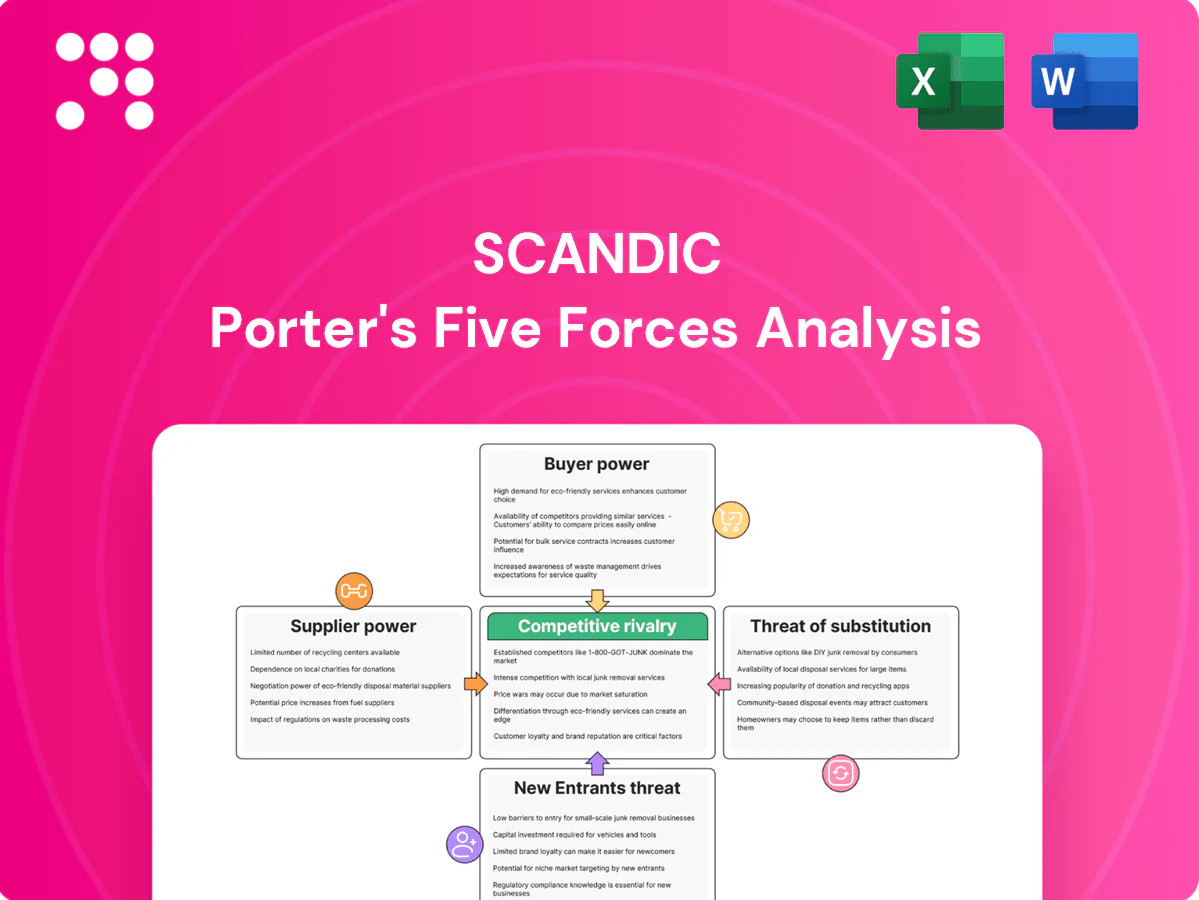
Description
Elevate Your Analysis with the Complete Porter's Five Forces Analysis
Scandic's competitive landscape is shaped by the interplay of buyer power, supplier leverage, the threat of new entrants, and the availability of substitutes. Understanding these forces is crucial for navigating the hotel industry.
The complete report reveals the real forces shaping Scandic’s industry—from supplier influence to threat of new entrants. Gain actionable insights to drive smarter decision-making.
Suppliers Bargaining Power
Fragmented Supplier Base
Scandic benefits from a generally fragmented supplier base for many of its operational needs, such as food and beverages, cleaning supplies, and general hotel amenities. This wide distribution of suppliers means no single one can typically dictate terms or prices, which is advantageous for Scandic. For example, in 2023, the European food and beverage market, a key input for Scandic, saw numerous smaller, regional suppliers competing with larger entities, keeping input costs relatively stable for hotel chains.
However, this fragmentation isn't uniform across all supplier categories. For specialized areas, like advanced hotel technology systems or unique sustainability consulting services, the supplier pool can be much smaller. In such cases, these specialized suppliers may hold more bargaining power due to their unique expertise or proprietary technology, potentially impacting Scandic's costs for these specific services.
Importance of Volume to Suppliers
Scandic's considerable scale, operating around 280 hotels with 58,000 rooms as of early 2024, translates into significant purchasing volume. This sheer size grants Scandic considerable leverage when negotiating with its suppliers, allowing it to secure more favorable pricing and terms. For instance, a hotel chain of Scandic's magnitude can command discounts on bulk orders of linens, food supplies, and amenities that smaller competitors cannot access.
This substantial volume directly diminishes the bargaining power of suppliers. Suppliers are incentivized to offer competitive pricing and favorable conditions to secure Scandic's consistent and large-scale business, as losing such a client would represent a significant revenue loss. This dynamic shifts the power balance firmly in Scandic's favor.
Furthermore, Scandic's strategy of establishing long-term contracts with key suppliers further solidifies its advantageous position. These agreements provide suppliers with predictable demand, while simultaneously locking in favorable pricing and service levels for Scandic, thereby mitigating the risk of sudden price hikes or supply disruptions.
Sustainability and Ethical Sourcing Requirements
Scandic's robust commitment to sustainability, exemplified by its adherence to the Nordic Swan Ecolabel and its comprehensive Supply Chain Code of Conduct, significantly shapes its supplier relationships. This dedication to ethical and sustainable sourcing practices means that not all suppliers can meet Scandic's rigorous standards.
Consequently, this selective procurement process can narrow the field of eligible suppliers, inadvertently bolstering the bargaining power of those businesses that demonstrably meet Scandic's stringent environmental and social criteria. For instance, in 2023, Scandic reported that 94% of its procurement value was covered by its sustainability requirements, highlighting the extensive influence of these standards on its supplier base.
Switching Costs for Major Supplies
While Scandic might easily switch providers for everyday items like linens or cleaning supplies, the cost and effort involved in changing suppliers for critical, large-scale services are considerably higher. For instance, replacing a property management system or sourcing new major renovation materials can involve substantial financial outlay, extensive training, and potential operational downtime, thereby increasing dependence on existing key suppliers.
- High Switching Costs for Core Services: Scandic faces significant financial and operational hurdles when changing providers for essential services like integrated property management software or long-term contracts for large-scale construction materials.
- Operational Disruption Risk: A transition to a new major supplier can lead to temporary disruptions in hotel operations, impacting guest services and internal workflows, which is a key consideration in supplier relationships.
- Supplier Dependence: The substantial investment required to switch major suppliers creates a degree of reliance on established partners, granting them a stronger bargaining position.
- Impact on Profitability: Increased costs associated with supplier switching can directly affect Scandic's profitability, making the negotiation of favorable terms with existing suppliers a strategic imperative.
Landlord Power in Lease Agreements
Scandic's reliance on leased properties means landlords hold considerable sway. In 2024, prime real estate markets saw continued strength, potentially increasing landlord leverage. This can translate into higher rental costs and stricter lease terms, impacting Scandic's operational expenses and flexibility.
- Landlord Leverage: In 2024, the hotel real estate market, particularly in sought-after urban centers, continued to favor property owners. This trend grants landlords significant bargaining power in lease negotiations.
- Cost Implications: Increased landlord power can lead to higher base rents and potentially escalations tied to inflation or market performance, directly affecting Scandic's cost structure. For example, reports from early 2024 indicated a 5-7% average increase in commercial lease rates in major European cities.
- Operational Constraints: Landlords may also dictate renovation requirements or impose limitations on property usage, which can affect Scandic's ability to adapt its hotel offerings to changing market demands.
Supplier Power Dynamics: Scale vs. Specialization
Scandic's bargaining power with suppliers is generally strong due to its large scale and fragmented supplier base for common goods, allowing for favorable pricing. However, this power is somewhat tempered by the high switching costs associated with specialized services and the leverage held by landlords in its leased property portfolio.
The company's significant purchasing volume, encompassing around 280 hotels with 58,000 rooms as of early 2024, enables it to negotiate better terms. For instance, its commitment to sustainability means 94% of its procurement value in 2023 adhered to stringent standards, influencing supplier selection and potentially empowering those that meet these criteria.
Conversely, landlords in prime locations, especially in 2024, wield considerable power, leading to potentially higher rents and stricter lease terms, as seen in early 2024 reports of 5-7% average increases in commercial lease rates in major European cities.
Switching core service providers, such as for integrated property management software, involves substantial financial and operational risks, creating a degree of dependence and thus increasing the bargaining power of these specialized suppliers.
What is included in the product
Detailed Word Document
Scandic's Porter's Five Forces Analysis examines the competitive intensity within the hotel industry, assessing the threat of new entrants, the bargaining power of buyers and suppliers, the threat of substitutes, and the rivalry among existing competitors.
Customizable Excel Spreadsheet
Scandic Porter's Five Forces Analysis provides a clear, actionable framework to identify and mitigate competitive threats, transforming complex market dynamics into manageable strategic levers.
Customers Bargaining Power
Diverse Customer Segments
Scandic's diverse customer base, spanning business and leisure travelers across various price points, inherently dilutes the bargaining power of any single group. This broad appeal means that a downturn in demand from, say, corporate bookings in 2024, could be cushioned by continued strong leisure travel. For instance, in the first quarter of 2024, Scandic reported that its leisure segment showed resilience, partially offsetting slower corporate demand.
Large Loyalty Program Membership
Scandic Friends, the largest loyalty program in the Nordic hotel sector, significantly influences the bargaining power of customers. In 2024, approximately 37% of Scandic's bookings originated from its members, demonstrating a substantial captive audience.
This large, engaged membership base directly curtails customer price sensitivity. Members are less likely to switch to competitors for minor price differences due to the accumulated benefits and perceived value of the loyalty program.
Consequently, the extensive reach of Scandic Friends strengthens the company's position by reducing the overall bargaining power of individual customers, as a significant portion of the customer base is already committed.
Price Sensitivity in Economy Segment
Scandic's strategic move with Scandic Go, specifically designed for the economy segment, highlights a significant portion of their clientele prioritizing affordability. This segment's keen focus on price means they possess considerable bargaining power, compelling Scandic to maintain highly competitive pricing structures to attract and retain these customers.
Corporate and Group Booking Leverage
Corporate and group bookings represent a substantial portion of Scandic's business, with business travelers, including government entities, accounting for nearly 60% of their revenue. This significant volume allows these large clients to wield considerable bargaining power.
These influential customers frequently negotiate for preferential rates and customized terms, directly impacting Scandic's pricing strategies and profitability. The ability to secure bulk deals means these buyers can often dictate more favorable conditions.
- Significant Revenue Driver: Business travelers and group bookings are critical to Scandic's financial performance.
- Negotiating Leverage: Large corporate clients and group organizers possess the power to negotiate better pricing.
- Impact on Profitability: Favorable terms secured by these customers can influence Scandic's margins.
- Strategic Importance: Managing these relationships effectively is key to maintaining revenue streams.
Online Travel Agencies (OTAs) Influence
The widespread adoption of Online Travel Agencies (OTAs) significantly amplifies customer bargaining power. These platforms offer consumers unparalleled ease in comparing prices and booking accommodations across numerous hotel brands, thereby enhancing price transparency and empowering travelers to seek the best deals.
For Scandic, this means a constant need to strategically manage its presence on OTAs. Balancing the benefits of increased reach through these channels against the potential for margin erosion due to commissions is a critical challenge.
- OTA Dominance: In 2024, OTAs continued to be a primary booking channel for many travelers, with platforms like Booking.com and Expedia holding substantial market share.
- Price Sensitivity: Customer research indicates a high degree of price sensitivity, with many consumers actively using comparison tools offered by OTAs before making a reservation.
- Direct Booking Incentives: Scandic, like other hotel groups, often implements loyalty programs and direct booking incentives to encourage customers to bypass OTAs and book directly, thereby mitigating commission costs and strengthening customer relationships.
- Commission Structures: OTA commission rates can range from 15% to 30% or more, directly impacting the profitability of bookings made through these third-party platforms.
Customer Bargaining Power: Loyalty vs. OTA Influence
Scandic's bargaining power of customers is influenced by its diverse customer segments, including price-sensitive economy travelers and large corporate clients. While the Scandic Friends loyalty program, with approximately 37% of bookings in 2024 originating from members, helps mitigate this power by fostering loyalty, the extensive use of Online Travel Agencies (OTAs) provides customers with significant price comparison tools, increasing their leverage.
| Customer Segment | Bargaining Power Factor | Impact on Scandic |
|---|---|---|
| Economy Travelers (Scandic Go) | High price sensitivity | Requires competitive pricing |
| Corporate & Group Bookings | Bulk purchasing power | Negotiate preferential rates, impacting margins |
| Scandic Friends Members | Loyalty program benefits | Reduces price sensitivity, strengthens relationship |
| OTA Users | Price transparency and comparison | Increases price competition, potential margin erosion |
Same Document Delivered
Scandic Porter's Five Forces Analysis
This preview displays the complete Scandic Porter's Five Forces Analysis, offering a detailed examination of competitive forces within the industry. The document you see here is precisely what you will receive immediately after purchase, ensuring full transparency and no hidden content. You can trust that this analysis is professionally crafted and ready for your immediate use upon acquisition.