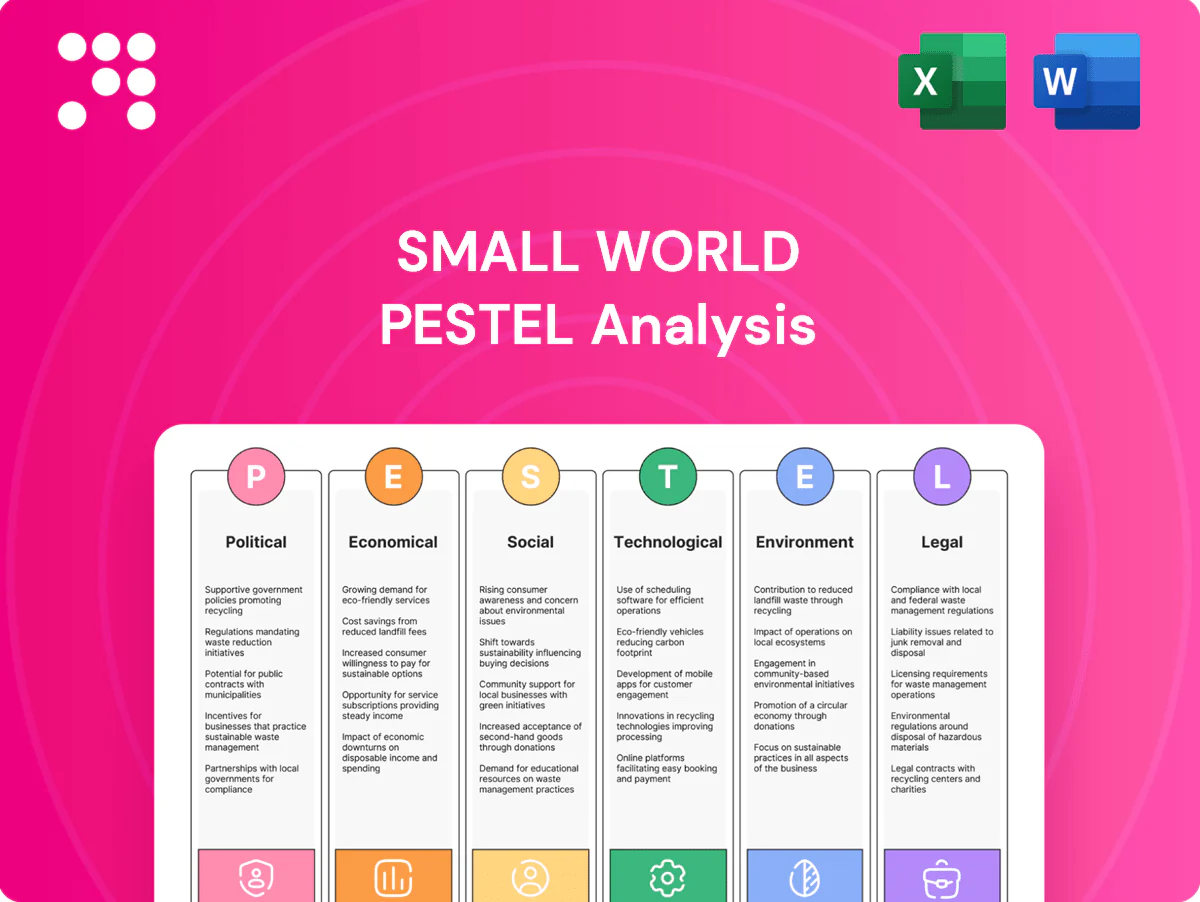
Ramsay Sante PESTLE Analysis

Skip the Research. Get the Strategy.
Navigate the complex external landscape impacting Ramsay Sante with our comprehensive PESTLE analysis. Understand the political, economic, social, technological, legal, and environmental factors that are shaping its strategic direction and market position. Equip yourself with actionable intelligence to anticipate challenges and capitalize on opportunities.
Gain a critical understanding of how global shifts influence Ramsay Sante's operations and future growth. This meticulously researched PESTLE analysis provides the insights you need to make informed decisions and refine your own market strategy. Download the full version now for immediate access to expert-level market intelligence.
Political factors

Government Healthcare Policies and Reforms
Government healthcare policies are a major driver for Ramsay Santé, particularly in its European markets where public systems dominate. For instance, France, a key operational base, has seen ongoing reforms aimed at controlling healthcare costs and improving efficiency. These reforms often include adjustments to reimbursement rates for medical procedures and pharmaceuticals, directly influencing Ramsay Santé's revenue. In 2024, France's national health insurance fund, the Assurance Maladie, continued its focus on value-based care and digital health integration, potentially impacting how services are priced and delivered.
Changes in reimbursement policies can significantly alter Ramsay Santé's profitability. For example, if the French government or other European nations reduce the tariffs paid for specific treatments or hospital stays, Ramsay Santé's income from those services would decrease. Conversely, policies that favor private healthcare providers or encourage investment in new medical technologies could present opportunities. The company's strategic planning must constantly adapt to these evolving governmental directives to maintain its financial health and operational effectiveness across its diverse network.
Privatization Trends in Healthcare
The political landscape across Europe shows a varied approach to public-private partnerships (PPPs) in healthcare, directly impacting Ramsay Santé's operational environment. For instance, in 2024, Germany continued its robust debate on the role of private providers within its social healthcare system, while France, a key market for Ramsay Santé, maintained a policy favoring a mixed public-private model, with private hospitals playing a significant role in complementing public services.
Ramsay Santé's growth strategy is intrinsically linked to these evolving privatization trends. A favorable political climate for PPPs can unlock opportunities for acquisitions and new facility developments, as seen in the company's expansion in Spain, where regional governments have increasingly sought private sector involvement to manage public healthcare facilities. Conversely, a shift towards greater state control or stricter regulations on private providers could limit Ramsay Santé's market access and service diversification.

Cross-border Healthcare Directives
European Union directives on cross-border healthcare, such as the 2011 Directive on the application of patients' rights in cross-border healthcare, directly impact Ramsay Santé's operational landscape by facilitating patient mobility across member states. This legislation influences how Ramsay Santé can attract and serve patients from different EU countries, affecting demand for its specialized services.
These directives also shape the complex reimbursement mechanisms for cross-border treatments, a critical factor for Ramsay Santé's international business model. For instance, the directive allows patients to seek treatment in another EU country and be reimbursed by their home country's national health insurance, provided certain conditions are met, impacting revenue streams and operational planning.

Healthcare Budget Allocations
National healthcare budgets, heavily influenced by political priorities, directly shape the financial landscape for healthcare providers. For instance, France's 2024 social security budget allocated €236 billion to healthcare, a significant figure that impacts how private entities like Ramsay Santé operate within the system.
Changes in these government funding levels can alter the demand for services from private operators and the viability of existing public-private partnerships. Political decisions regarding healthcare spending, such as those seen in the UK's NHS budget, which saw an increase to £152 billion for 2024-2025, directly influence the commissioning of services from private providers.
- Government funding levels directly impact the revenue streams for private healthcare providers like Ramsay Santé.
- Political decisions on healthcare spending can lead to shifts in the volume of services outsourced to the private sector.
- Changes in national healthcare budgets can affect the profitability and investment capacity of private healthcare companies.
Political Stability and Regulatory Environment
Political stability across Ramsay Santé's operating regions, primarily France, Belgium, Spain, and Italy, is crucial. This stability ensures a more predictable regulatory landscape for healthcare services. For instance, France, Ramsay Santé's largest market, has maintained a relatively stable political environment, allowing for consistent healthcare policy implementation. In 2024, the French government continued its focus on hospital reform and digital health initiatives, which Ramsay Santé is well-positioned to leverage.
However, potential political shifts could introduce volatility. Changes in government in any of these key markets might trigger swift alterations in healthcare funding, reimbursement policies, or service delivery regulations. Such shifts can necessitate rapid strategic adjustments for Ramsay Santé, impacting its operational planning and investment decisions. For example, a change in government in Spain in late 2023 led to discussions around potential healthcare budget reallocations, underscoring the need for agility.
- France's healthcare spending represented 11.5% of its GDP in 2023, a figure closely watched for potential policy shifts.
- Ramsay Santé's 2024 strategic focus includes adapting to evolving digital health regulations across its European footprint.
- Unforeseen political instability in a major market could necessitate a review of capital expenditure plans.
Government Policies and Funding: Critical Determinants for European Healthcare
Government healthcare policies and funding levels are critical determinants for Ramsay Santé's revenue and operational strategies across its European markets. France's 2024 social security budget, for example, allocated €236 billion to healthcare, directly impacting reimbursement rates and the demand for private services. Similarly, the UK's National Health Service budget increase to £152 billion for 2024-2025 influences service commissioning from private providers like Ramsay Santé.
Political stability and evolving privatization trends also shape Ramsay Santé's growth. France's consistent policy favoring a mixed public-private model, alongside Spain's increasing reliance on private sector involvement for managing public facilities, presents opportunities for expansion. However, potential political shifts in these key markets could introduce regulatory volatility and necessitate agile strategic adjustments.
European Union directives, such as those facilitating cross-border healthcare, influence patient mobility and reimbursement mechanisms, impacting Ramsay Santé's international business model. The company's strategic planning must remain responsive to these regulatory frameworks and national healthcare budget allocations to ensure continued financial health and operational effectiveness.
| Country | 2024 Healthcare Budget/Spending (Approx.) | Ramsay Santé Presence |
|---|---|---|
| France | €236 billion (Social Security Budget) | Major Market |
| United Kingdom | £152 billion (NHS Budget) | Significant Operations |
| Spain | Varies by region, increasing private sector involvement | Growing Market |
| Belgium | National healthcare expenditure data available | Key Market |
| Italy | National healthcare expenditure data available | Key Market |
What is included in the product
 Detailed Word Document
This Ramsay Sante PESTLE analysis provides a comprehensive examination of the external macro-environmental factors influencing the company's operations across Political, Economic, Social, Technological, Environmental, and Legal dimensions.

 Customizable Excel Spreadsheet
The Ramsay Sante PESTLE analysis offers a clear, summarized version of external factors, acting as a pain point reliver by providing easy referencing during meetings and presentations.
Economic factors

Healthcare Spending and GDP Growth
The economic vitality of European nations, particularly their Gross Domestic Product (GDP) growth, plays a crucial role in shaping healthcare spending. In 2023, the Eurozone's GDP saw a modest expansion of 0.5%, and projections for 2024 anticipate a similar trend, around 0.9%. This economic backdrop directly impacts the capacity for both public and private investment in healthcare services.
When economies grow, national healthcare budgets tend to increase, as do household incomes which can support private healthcare expenditure. For instance, if a country's GDP rises by 2%, it often translates to a proportional or even greater increase in healthcare spending as demand for services grows and governments have more resources. This upward trend in spending is a positive indicator for companies like Ramsay Santé, as it suggests a larger market for their offerings.
In 2024, healthcare spending across major European economies is expected to continue its upward trajectory, driven by aging populations and technological advancements. For example, Germany's healthcare expenditure as a percentage of GDP was around 12.7% in recent years, and this figure is anticipated to remain robust, reflecting a sustained demand for healthcare services. This sustained demand provides a stable foundation for Ramsay Santé's revenue growth.
Inflation and Operating Costs
Rising inflation in 2024 and 2025 directly impacts Ramsay Santé's bottom line by increasing expenses. For instance, the cost of essential medical supplies, from bandages to advanced diagnostic equipment, has seen notable price hikes. Energy costs for powering hospitals and clinics also contribute significantly to these rising operating expenses.
Wages for skilled medical professionals are another key area affected by inflation. To retain talent and meet market demands, Ramsay Santé may need to offer higher salaries, adding to personnel costs. The company must navigate these increased expenditures while ensuring its services remain accessible and competitive in the healthcare market.

Private Health Insurance Market Trends
The European private health insurance market is experiencing steady growth, with a penetration rate that varies significantly by country but generally shows an upward trend. For instance, in 2023, the market size was estimated to be around €200 billion, with projections indicating continued expansion driven by an aging population and increasing demand for specialized medical services.
Changes in insurance coverage and premium costs are directly impacting Ramsay Santé's revenue streams. In 2024, average premium increases across Europe have been observed in the range of 5-8%, a factor that can influence patient affordability and the utilization of private healthcare services. Employer-sponsored health benefits remain a key driver, with many companies in 2024 continuing to offer robust private health coverage as a competitive employee perk.

Labor Market Dynamics and Wages
The availability and cost of skilled healthcare professionals, including doctors, nurses, and specialists, represent a significant economic factor for Ramsay Santé. Wage inflation and persistent labor shortages within the healthcare sector directly influence operational expenses and can affect the quality and accessibility of services. For instance, in France, the average gross monthly salary for a nurse was approximately €2,700 in early 2024, a figure that has seen upward pressure due to demand.
These dynamics can heighten Ramsay Santé's operating costs and potentially constrain its capacity to deliver services efficiently.
- Healthcare Labor Shortages: Persistent shortages, particularly in specialized medical fields, drive up recruitment costs and can lead to reliance on more expensive temporary staffing.
- Wage Inflation: Rising wage expectations among healthcare professionals, fueled by demand and inflation, directly impact Ramsay Santé's personnel expenses.
- Impact on Service Delivery: Labor constraints can limit the number of procedures or patient admissions, affecting revenue and patient satisfaction.
- Geographic Disparities: Wage and availability differences between urban and rural areas can create recruitment challenges for facilities in less populated regions.
Impact of Interest Rates and Capital Investment
Changes in interest rates directly influence Ramsay Santé's cost of capital. For instance, if the European Central Bank's key interest rates, which were held at 0% for an extended period, were to rise significantly, Ramsay Santé would face higher borrowing costs for its planned expansions and technological upgrades. This increased expense can impact the feasibility and profitability of new hospital constructions or the acquisition of advanced medical equipment.
A higher interest rate environment can make capital investment projects considerably more expensive. This directly affects Ramsay Santé's growth strategies and overall financial performance. For example, a project requiring €100 million in funding might see its annual interest payments increase by millions if rates climb from 1% to 4%. This necessitates careful financial planning and potentially a reassessment of investment priorities.
The impact of interest rate fluctuations on Ramsay Santé's financial health is significant, particularly concerning its capital expenditure plans.
- Increased Borrowing Costs: Higher interest rates directly translate to more expensive loans for new facilities and technology.
- Impact on Expansion: Projects like building new clinics or upgrading existing infrastructure become costlier, potentially slowing expansion.
- Financial Performance: Elevated interest expenses can reduce net profit margins, affecting the company's bottom line.
- Investment Decisions: The cost of capital influences the decision-making process for future investments, favoring projects with higher potential returns to offset increased financing costs.
European Healthcare: Economic Headwinds and Growth Drivers
Economic growth in Europe, while modest in 2023 and projected to remain so for 2024, directly influences healthcare spending capacity. Higher GDP generally correlates with increased public and private investment in healthcare, benefiting companies like Ramsay Santé by expanding the market for their services.
Inflationary pressures in 2024 and 2025 are increasing operating expenses for Ramsay Santé, impacting costs for medical supplies, energy, and wages for skilled professionals. Navigating these rising costs while maintaining competitive pricing is a key challenge.
The European private health insurance market is expanding, driven by demographics and demand for specialized care, with premium increases in 2024 affecting patient affordability. Robust employer-sponsored health benefits continue to be a significant revenue driver for Ramsay Santé.
Labor shortages and wage inflation for healthcare professionals are a major economic factor for Ramsay Santé, increasing operational costs and potentially impacting service delivery capacity. For example, average gross monthly salaries for nurses in France were around €2,700 in early 2024, showing upward pressure.
Full Version Awaits
Ramsay Sante PESTLE Analysis
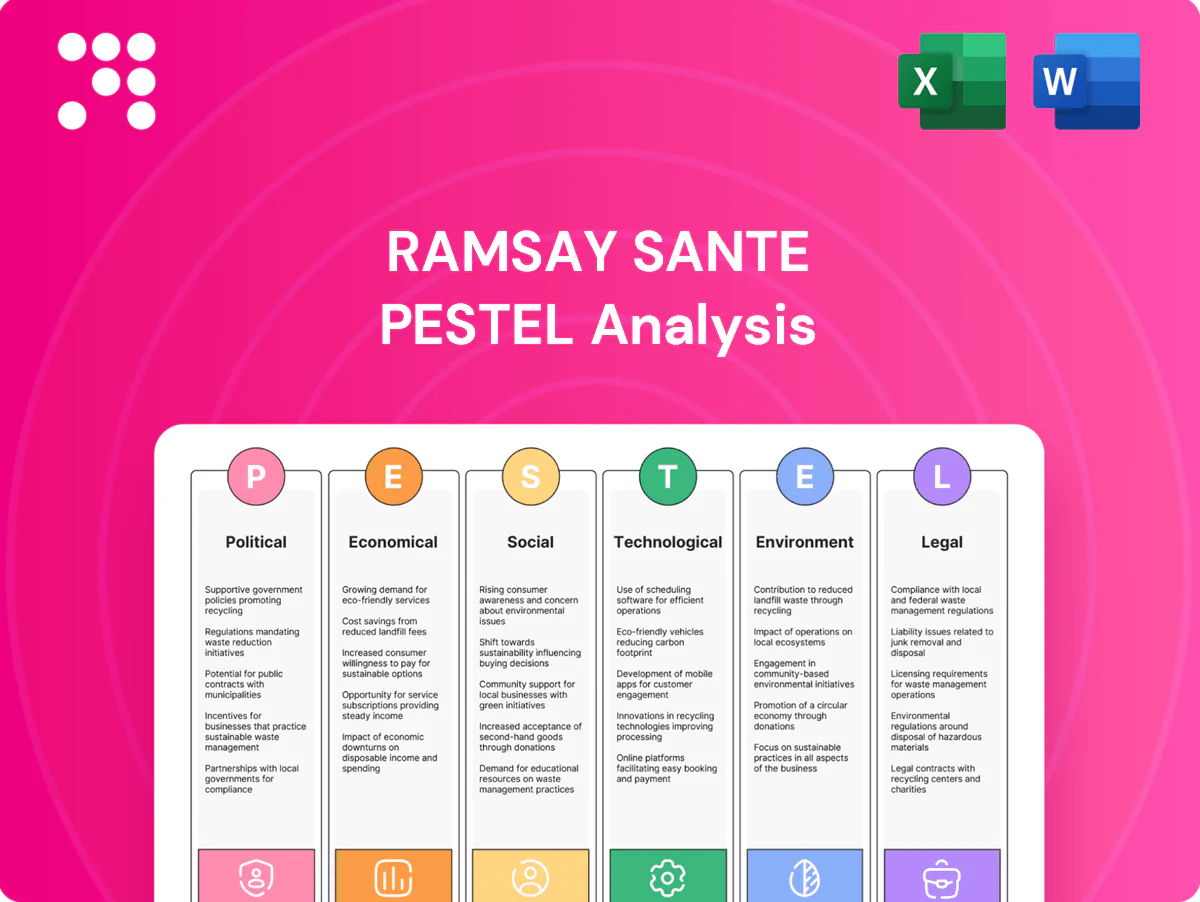
The preview shown here is the exact document you’ll receive after purchase—fully formatted and ready to use. This comprehensive Ramsay Sante PESTLE analysis breaks down the political, economic, social, technological, legal, and environmental factors impacting the healthcare provider.
This is a real screenshot of the product you’re buying—delivered exactly as shown, no surprises. You can trust that the detailed insights and strategic considerations presented in this Ramsay Sante PESTLE analysis are precisely what you will download.
The content and structure shown in the preview is the same document you’ll download after payment. This Ramsay Sante PESTLE analysis provides a thorough examination, equipping you with the knowledge to understand the external forces at play.

Description
Skip the Research. Get the Strategy.
Navigate the complex external landscape impacting Ramsay Sante with our comprehensive PESTLE analysis. Understand the political, economic, social, technological, legal, and environmental factors that are shaping its strategic direction and market position. Equip yourself with actionable intelligence to anticipate challenges and capitalize on opportunities.
Gain a critical understanding of how global shifts influence Ramsay Sante's operations and future growth. This meticulously researched PESTLE analysis provides the insights you need to make informed decisions and refine your own market strategy. Download the full version now for immediate access to expert-level market intelligence.
Political factors
Government Healthcare Policies and Reforms
Government healthcare policies are a major driver for Ramsay Santé, particularly in its European markets where public systems dominate. For instance, France, a key operational base, has seen ongoing reforms aimed at controlling healthcare costs and improving efficiency. These reforms often include adjustments to reimbursement rates for medical procedures and pharmaceuticals, directly influencing Ramsay Santé's revenue. In 2024, France's national health insurance fund, the Assurance Maladie, continued its focus on value-based care and digital health integration, potentially impacting how services are priced and delivered.
Changes in reimbursement policies can significantly alter Ramsay Santé's profitability. For example, if the French government or other European nations reduce the tariffs paid for specific treatments or hospital stays, Ramsay Santé's income from those services would decrease. Conversely, policies that favor private healthcare providers or encourage investment in new medical technologies could present opportunities. The company's strategic planning must constantly adapt to these evolving governmental directives to maintain its financial health and operational effectiveness across its diverse network.
Privatization Trends in Healthcare
The political landscape across Europe shows a varied approach to public-private partnerships (PPPs) in healthcare, directly impacting Ramsay Santé's operational environment. For instance, in 2024, Germany continued its robust debate on the role of private providers within its social healthcare system, while France, a key market for Ramsay Santé, maintained a policy favoring a mixed public-private model, with private hospitals playing a significant role in complementing public services.
Ramsay Santé's growth strategy is intrinsically linked to these evolving privatization trends. A favorable political climate for PPPs can unlock opportunities for acquisitions and new facility developments, as seen in the company's expansion in Spain, where regional governments have increasingly sought private sector involvement to manage public healthcare facilities. Conversely, a shift towards greater state control or stricter regulations on private providers could limit Ramsay Santé's market access and service diversification.
Cross-border Healthcare Directives
European Union directives on cross-border healthcare, such as the 2011 Directive on the application of patients' rights in cross-border healthcare, directly impact Ramsay Santé's operational landscape by facilitating patient mobility across member states. This legislation influences how Ramsay Santé can attract and serve patients from different EU countries, affecting demand for its specialized services.
These directives also shape the complex reimbursement mechanisms for cross-border treatments, a critical factor for Ramsay Santé's international business model. For instance, the directive allows patients to seek treatment in another EU country and be reimbursed by their home country's national health insurance, provided certain conditions are met, impacting revenue streams and operational planning.
Healthcare Budget Allocations
National healthcare budgets, heavily influenced by political priorities, directly shape the financial landscape for healthcare providers. For instance, France's 2024 social security budget allocated €236 billion to healthcare, a significant figure that impacts how private entities like Ramsay Santé operate within the system.
Changes in these government funding levels can alter the demand for services from private operators and the viability of existing public-private partnerships. Political decisions regarding healthcare spending, such as those seen in the UK's NHS budget, which saw an increase to £152 billion for 2024-2025, directly influence the commissioning of services from private providers.
- Government funding levels directly impact the revenue streams for private healthcare providers like Ramsay Santé.
- Political decisions on healthcare spending can lead to shifts in the volume of services outsourced to the private sector.
- Changes in national healthcare budgets can affect the profitability and investment capacity of private healthcare companies.
Political Stability and Regulatory Environment
Political stability across Ramsay Santé's operating regions, primarily France, Belgium, Spain, and Italy, is crucial. This stability ensures a more predictable regulatory landscape for healthcare services. For instance, France, Ramsay Santé's largest market, has maintained a relatively stable political environment, allowing for consistent healthcare policy implementation. In 2024, the French government continued its focus on hospital reform and digital health initiatives, which Ramsay Santé is well-positioned to leverage.
However, potential political shifts could introduce volatility. Changes in government in any of these key markets might trigger swift alterations in healthcare funding, reimbursement policies, or service delivery regulations. Such shifts can necessitate rapid strategic adjustments for Ramsay Santé, impacting its operational planning and investment decisions. For example, a change in government in Spain in late 2023 led to discussions around potential healthcare budget reallocations, underscoring the need for agility.
- France's healthcare spending represented 11.5% of its GDP in 2023, a figure closely watched for potential policy shifts.
- Ramsay Santé's 2024 strategic focus includes adapting to evolving digital health regulations across its European footprint.
- Unforeseen political instability in a major market could necessitate a review of capital expenditure plans.
Government Policies and Funding: Critical Determinants for European Healthcare
Government healthcare policies and funding levels are critical determinants for Ramsay Santé's revenue and operational strategies across its European markets. France's 2024 social security budget, for example, allocated €236 billion to healthcare, directly impacting reimbursement rates and the demand for private services. Similarly, the UK's National Health Service budget increase to £152 billion for 2024-2025 influences service commissioning from private providers like Ramsay Santé.
Political stability and evolving privatization trends also shape Ramsay Santé's growth. France's consistent policy favoring a mixed public-private model, alongside Spain's increasing reliance on private sector involvement for managing public facilities, presents opportunities for expansion. However, potential political shifts in these key markets could introduce regulatory volatility and necessitate agile strategic adjustments.
European Union directives, such as those facilitating cross-border healthcare, influence patient mobility and reimbursement mechanisms, impacting Ramsay Santé's international business model. The company's strategic planning must remain responsive to these regulatory frameworks and national healthcare budget allocations to ensure continued financial health and operational effectiveness.
| Country | 2024 Healthcare Budget/Spending (Approx.) | Ramsay Santé Presence |
|---|---|---|
| France | €236 billion (Social Security Budget) | Major Market |
| United Kingdom | £152 billion (NHS Budget) | Significant Operations |
| Spain | Varies by region, increasing private sector involvement | Growing Market |
| Belgium | National healthcare expenditure data available | Key Market |
| Italy | National healthcare expenditure data available | Key Market |
What is included in the product
Detailed Word Document
This Ramsay Sante PESTLE analysis provides a comprehensive examination of the external macro-environmental factors influencing the company's operations across Political, Economic, Social, Technological, Environmental, and Legal dimensions.
Customizable Excel Spreadsheet
The Ramsay Sante PESTLE analysis offers a clear, summarized version of external factors, acting as a pain point reliver by providing easy referencing during meetings and presentations.
Economic factors
Healthcare Spending and GDP Growth
The economic vitality of European nations, particularly their Gross Domestic Product (GDP) growth, plays a crucial role in shaping healthcare spending. In 2023, the Eurozone's GDP saw a modest expansion of 0.5%, and projections for 2024 anticipate a similar trend, around 0.9%. This economic backdrop directly impacts the capacity for both public and private investment in healthcare services.
When economies grow, national healthcare budgets tend to increase, as do household incomes which can support private healthcare expenditure. For instance, if a country's GDP rises by 2%, it often translates to a proportional or even greater increase in healthcare spending as demand for services grows and governments have more resources. This upward trend in spending is a positive indicator for companies like Ramsay Santé, as it suggests a larger market for their offerings.
In 2024, healthcare spending across major European economies is expected to continue its upward trajectory, driven by aging populations and technological advancements. For example, Germany's healthcare expenditure as a percentage of GDP was around 12.7% in recent years, and this figure is anticipated to remain robust, reflecting a sustained demand for healthcare services. This sustained demand provides a stable foundation for Ramsay Santé's revenue growth.
Inflation and Operating Costs
Rising inflation in 2024 and 2025 directly impacts Ramsay Santé's bottom line by increasing expenses. For instance, the cost of essential medical supplies, from bandages to advanced diagnostic equipment, has seen notable price hikes. Energy costs for powering hospitals and clinics also contribute significantly to these rising operating expenses.
Wages for skilled medical professionals are another key area affected by inflation. To retain talent and meet market demands, Ramsay Santé may need to offer higher salaries, adding to personnel costs. The company must navigate these increased expenditures while ensuring its services remain accessible and competitive in the healthcare market.
Private Health Insurance Market Trends
The European private health insurance market is experiencing steady growth, with a penetration rate that varies significantly by country but generally shows an upward trend. For instance, in 2023, the market size was estimated to be around €200 billion, with projections indicating continued expansion driven by an aging population and increasing demand for specialized medical services.
Changes in insurance coverage and premium costs are directly impacting Ramsay Santé's revenue streams. In 2024, average premium increases across Europe have been observed in the range of 5-8%, a factor that can influence patient affordability and the utilization of private healthcare services. Employer-sponsored health benefits remain a key driver, with many companies in 2024 continuing to offer robust private health coverage as a competitive employee perk.
Labor Market Dynamics and Wages
The availability and cost of skilled healthcare professionals, including doctors, nurses, and specialists, represent a significant economic factor for Ramsay Santé. Wage inflation and persistent labor shortages within the healthcare sector directly influence operational expenses and can affect the quality and accessibility of services. For instance, in France, the average gross monthly salary for a nurse was approximately €2,700 in early 2024, a figure that has seen upward pressure due to demand.
These dynamics can heighten Ramsay Santé's operating costs and potentially constrain its capacity to deliver services efficiently.
- Healthcare Labor Shortages: Persistent shortages, particularly in specialized medical fields, drive up recruitment costs and can lead to reliance on more expensive temporary staffing.
- Wage Inflation: Rising wage expectations among healthcare professionals, fueled by demand and inflation, directly impact Ramsay Santé's personnel expenses.
- Impact on Service Delivery: Labor constraints can limit the number of procedures or patient admissions, affecting revenue and patient satisfaction.
- Geographic Disparities: Wage and availability differences between urban and rural areas can create recruitment challenges for facilities in less populated regions.
Impact of Interest Rates and Capital Investment
Changes in interest rates directly influence Ramsay Santé's cost of capital. For instance, if the European Central Bank's key interest rates, which were held at 0% for an extended period, were to rise significantly, Ramsay Santé would face higher borrowing costs for its planned expansions and technological upgrades. This increased expense can impact the feasibility and profitability of new hospital constructions or the acquisition of advanced medical equipment.
A higher interest rate environment can make capital investment projects considerably more expensive. This directly affects Ramsay Santé's growth strategies and overall financial performance. For example, a project requiring €100 million in funding might see its annual interest payments increase by millions if rates climb from 1% to 4%. This necessitates careful financial planning and potentially a reassessment of investment priorities.
The impact of interest rate fluctuations on Ramsay Santé's financial health is significant, particularly concerning its capital expenditure plans.
- Increased Borrowing Costs: Higher interest rates directly translate to more expensive loans for new facilities and technology.
- Impact on Expansion: Projects like building new clinics or upgrading existing infrastructure become costlier, potentially slowing expansion.
- Financial Performance: Elevated interest expenses can reduce net profit margins, affecting the company's bottom line.
- Investment Decisions: The cost of capital influences the decision-making process for future investments, favoring projects with higher potential returns to offset increased financing costs.
European Healthcare: Economic Headwinds and Growth Drivers
Economic growth in Europe, while modest in 2023 and projected to remain so for 2024, directly influences healthcare spending capacity. Higher GDP generally correlates with increased public and private investment in healthcare, benefiting companies like Ramsay Santé by expanding the market for their services.
Inflationary pressures in 2024 and 2025 are increasing operating expenses for Ramsay Santé, impacting costs for medical supplies, energy, and wages for skilled professionals. Navigating these rising costs while maintaining competitive pricing is a key challenge.
The European private health insurance market is expanding, driven by demographics and demand for specialized care, with premium increases in 2024 affecting patient affordability. Robust employer-sponsored health benefits continue to be a significant revenue driver for Ramsay Santé.
Labor shortages and wage inflation for healthcare professionals are a major economic factor for Ramsay Santé, increasing operational costs and potentially impacting service delivery capacity. For example, average gross monthly salaries for nurses in France were around €2,700 in early 2024, showing upward pressure.
Full Version Awaits
Ramsay Sante PESTLE Analysis
The preview shown here is the exact document you’ll receive after purchase—fully formatted and ready to use. This comprehensive Ramsay Sante PESTLE analysis breaks down the political, economic, social, technological, legal, and environmental factors impacting the healthcare provider.
This is a real screenshot of the product you’re buying—delivered exactly as shown, no surprises. You can trust that the detailed insights and strategic considerations presented in this Ramsay Sante PESTLE analysis are precisely what you will download.
The content and structure shown in the preview is the same document you’ll download after payment. This Ramsay Sante PESTLE analysis provides a thorough examination, equipping you with the knowledge to understand the external forces at play.